


As a supplier of Tbm HD DISC CUTTER, I've witnessed firsthand the importance of understanding how these cutters perform under different tunnel pressures. Tunnel boring machines (TBMs) are the workhorses of modern tunneling projects, and the performance of their disc cutters can significantly impact the efficiency and cost - effectiveness of these operations.
Understanding Tunnel Pressures
Tunnel pressures can vary greatly depending on several factors, including the depth of the tunnel, the type of soil or rock being excavated, and the groundwater conditions. At shallow depths, the overburden pressure is relatively low, and the cutter may face less resistance from the surrounding material. However, as the tunnel goes deeper, the pressure exerted on the cutter increases exponentially.
In addition to overburden pressure, groundwater pressure can also play a crucial role. High groundwater pressure can cause the soil or rock to become more saturated, which may change its mechanical properties. For example, in soft soils, high water pressure can lead to increased pore - water pressure, reducing the effective stress and making the soil more deformable. In hard rock, water can act as a lubricant, potentially affecting the friction between the cutter and the rock surface.
Cutting Performance in Low - Pressure Tunnels
In low - pressure tunnels, typically those at shallow depths, the Tbm HD DISC CUTTER generally experiences less wear and tear. The lower pressure means that the cutter does not have to exert as much force to penetrate the soil or rock. This results in a longer service life for the cutter, as it is not subjected to extreme stress.
The cutting efficiency in low - pressure environments is often high. The cutter can easily break through the relatively soft or loosely - packed materials, allowing for a faster tunneling speed. The smooth operation also reduces the likelihood of cutter jamming, which can cause significant delays in the tunneling process.
However, even in low - pressure situations, the cutter's performance can be affected by the type of material. For instance, in sandy soils, the cutter may experience some abrasion due to the presence of sand particles. Although the pressure is low, the constant rubbing of these particles against the cutter surface can gradually wear it down.
Cutting Performance in High - Pressure Tunnels
High - pressure tunnels present a much more challenging environment for Tbm HD DISC CUTTERS. The increased overburden pressure means that the cutter has to work harder to penetrate the rock or soil. This leads to higher forces acting on the cutter, which can cause more rapid wear.
One of the main issues in high - pressure tunnels is cutter head damage. The intense pressure can cause the cutter to deform or even break. The high forces can also lead to cracking in the cutter's body or the loss of the cutting edge. This not only reduces the cutting efficiency but also requires more frequent cutter replacements, increasing the overall cost of the tunneling project.

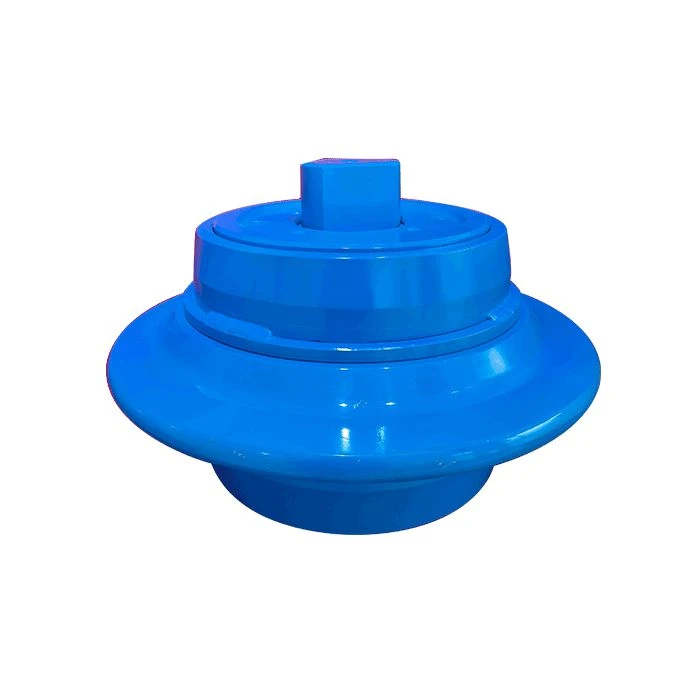
In high - pressure rock tunnels, the cutter may face difficulties in initiating the cutting process. The rock is often more compacted, and the cutter has to overcome a higher resistance to start chipping away at the rock. This can result in slower tunneling speeds and increased energy consumption.
Another challenge in high - pressure environments is the potential for cutter clogging. In soft soils or mixed - face conditions, the high pressure can force the soil or rock fragments into the cutter's grooves, preventing it from functioning properly.
Impact of Pressure on Cutter Design
To optimize the cutting performance in different tunnel pressures, the design of the Tbm HD DISC CUTTER needs to be carefully considered. For low - pressure tunnels, a lighter - duty cutter design may be sufficient. These cutters can be made with less robust materials, reducing the cost without sacrificing too much performance.
In contrast, for high - pressure tunnels, a heavy - duty cutter is essential. The cutter needs to be made of high - strength materials that can withstand the extreme forces. Reinforced cutter bodies and hard - facing technologies can be employed to enhance the cutter's durability.
The shape of the cutter also plays a role. In high - pressure situations, a more pointed cutter tip may be more effective in penetrating the hard rock. This allows the cutter to concentrate the force on a smaller area, increasing the pressure at the cutting edge and facilitating the initial penetration.
Our Product Offerings
As a supplier, we offer a range of Tbm HD DISC CUTTERS suitable for different tunnel pressures. Our TBM Hard Facing Disc Cutter is designed with advanced hard - facing technology, which provides excellent wear resistance, making it ideal for both low - and high - pressure environments.
The TBM Roller Disc Cutter is another great option. Its unique roller design allows for smooth rotation, reducing friction and improving cutting efficiency, especially in high - pressure situations where the forces are more evenly distributed.
For specific applications, our 19" Single Disc Cutter offers a reliable solution. It is engineered to handle a variety of soil and rock conditions, providing consistent performance in different tunnel pressures.
Conclusion and Call to Action
Understanding the cutting performance of Tbm HD DISC CUTTERS in different tunnel pressures is crucial for the success of any tunneling project. Whether it's a low - pressure tunnel at a shallow depth or a high - pressure tunnel deep underground, choosing the right cutter can make a significant difference in terms of efficiency, cost, and project timeline.
If you are involved in a tunneling project and are looking for high - quality Tbm HD DISC CUTTERS, we are here to help. Our team of experts can provide you with detailed information about our products and assist you in selecting the most suitable cutter for your specific needs. Contact us to start a purchase negotiation and ensure the smooth progress of your tunneling project.
References
- Atkinson, J. H. (1993). The mechanics of soils and foundations. McGraw - Hill.
- Barton, N. (2008). Rock mechanics, rock engineering and tunnelling - the complete works of NGI's Dr. Nils Barton. CRC Press.
- Rostami, J., & Ozdemir, L. (1993). Prediction of full - scale cutter performance: A new model. International Journal of Rock Mechanics and Mining Sciences & Geomechanics Abstracts, 30(6), 989 - 995.


