


The cutting performance of Tunnel Boring Machine (TBM) HD DISC CUTTER is a critical factor in tunnel construction projects. As a supplier of TBM HD DISC CUTTER, I have witnessed firsthand the impact of different tunnel rock joints on the cutter's performance. In this blog, I will delve into the intricacies of how TBM HD DISC CUTTER behaves in diverse rock joint conditions.
Understanding TBM HD DISC CUTTER
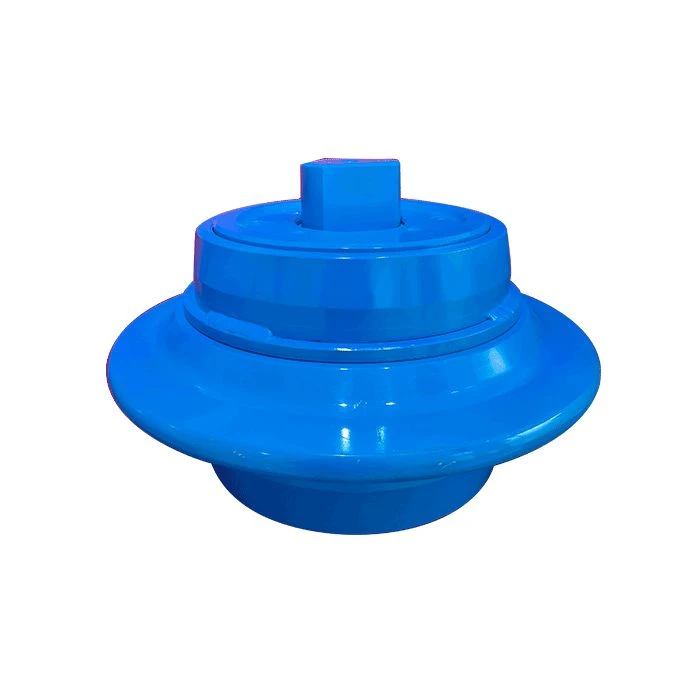
TBM HD DISC CUTTER is a specialized tool used in tunnel boring machines. It is designed to cut through various types of rock formations, enabling the efficient excavation of tunnels. The cutter consists of a circular disc with cutting edges that rotate under high pressure to break the rock. The high - strength and wear - resistant materials used in its construction ensure its durability and effectiveness in harsh tunneling environments.
Impact of Different Rock Joints on Cutting Performance
1. Closed Rock Joints
Closed rock joints are characterized by minimal separation between rock layers. In such conditions, the TBM HD DISC CUTTER faces a more homogeneous and continuous rock mass. The cutter has to rely on its own cutting force to break the rock. The cutting process is relatively stable, but it requires a significant amount of thrust and torque. The cutter's edges need to be sharp enough to penetrate the hard rock. For example, in granite formations with closed joints, the cutter may experience high levels of wear on the cutting edges due to the high compressive strength of the rock.
The cutting efficiency in closed rock joints is often lower compared to other joint conditions. The cutter has to work harder to create fractures in the rock, which may lead to increased energy consumption. However, the predictability of the cutting process is higher, as there are fewer uncertainties in the rock mass behavior.
2. Open Rock Joints
Open rock joints provide natural planes of weakness in the rock. When the TBM HD DISC CUTTER encounters open joints, it can take advantage of these pre - existing fractures. The cutter can more easily break the rock along the joint planes, reducing the required cutting force. This results in higher cutting efficiency and lower energy consumption.
In open jointed rock, the cutter may also experience less wear, as it is not constantly forced to cut through solid rock. However, there is a risk of the cutter getting stuck in the open joints if the joint width is too large. Additionally, the unevenness of the rock surface due to open joints may cause vibrations in the cutter, which can affect its long - term performance.
3. Intersecting Rock Joints
Intersecting rock joints create a complex network of fractures in the rock. This can be both an advantage and a challenge for the TBM HD DISC CUTTER. On one hand, the cutter can use the intersecting joints to break the rock into smaller pieces more easily, increasing the cutting efficiency. The rock fragments can be removed more readily, reducing the risk of clogging.
On the other hand, the complex joint pattern can cause the cutter to experience uneven loading. The cutter may be subjected to sudden changes in cutting force as it moves through different joint intersections. This can lead to premature wear and damage to the cutter, especially if the cutter is not properly designed to handle such complex loading conditions.
Our TBM HD DISC CUTTER Solutions
As a supplier, we offer a range of TBM HD DISC CUTTER products to meet the diverse needs of different tunnel projects. Our 19" Single Disc Cutter is suitable for medium - hard rock formations. It is designed with a robust structure and high - quality cutting edges to ensure long - term performance in various joint conditions.
For more challenging projects, our 20" Single Disc Cutter provides greater cutting force and durability. It is ideal for use in hard rock with complex joint patterns.
In addition, our TBM Roller Disc Scrapers are designed to work in conjunction with the disc cutters. They help to remove the rock fragments from the cutting area, improving the overall efficiency of the tunneling process.
Factors Affecting Cutting Performance
Apart from rock joint conditions, several other factors can influence the cutting performance of TBM HD DISC CUTTER.
1. Cutter Design
The design of the cutter, including the shape of the cutting edges, the size of the disc, and the material used, plays a crucial role in its performance. A well - designed cutter can distribute the cutting force more evenly, reducing wear and improving cutting efficiency. For example, a cutter with a sharp and curved cutting edge can penetrate the rock more easily than a flat - edged cutter.
2. TBM Operating Parameters
The operating parameters of the TBM, such as thrust, torque, and rotational speed, also affect the cutter's performance. Optimal operating parameters need to be selected based on the rock joint conditions. For instance, in soft rock with open joints, a lower thrust and higher rotational speed may be sufficient, while in hard rock with closed joints, a higher thrust and lower rotational speed may be required.

3. Rock Properties
In addition to joint conditions, other rock properties such as compressive strength, tensile strength, and abrasiveness also impact the cutter's performance. High - strength and abrasive rocks can cause rapid wear on the cutter, while softer rocks may require less cutting force.
Maximizing Cutting Performance
To maximize the cutting performance of TBM HD DISC CUTTER in different rock joint conditions, the following strategies can be adopted:
1. Pre - construction Rock Characterization
Before starting a tunnel project, a detailed rock characterization should be carried out. This includes identifying the rock joint conditions, rock properties, and the distribution of different rock types along the tunnel route. Based on this information, the appropriate cutter type and TBM operating parameters can be selected.
2. Regular Cutter Inspection and Maintenance
Regular inspection and maintenance of the cutters are essential to ensure their optimal performance. Worn - out cutters should be replaced in a timely manner to prevent further damage to the TBM and to maintain high cutting efficiency.
3. Continuous Monitoring and Adjustment
During the tunneling process, continuous monitoring of the cutter's performance and the TBM operating parameters is necessary. Based on the monitoring results, adjustments can be made to the operating parameters to adapt to the changing rock joint conditions.
Conclusion
The cutting performance of TBM HD DISC CUTTER is significantly affected by different tunnel rock joints. Closed rock joints require high cutting forces and may lead to increased wear, while open and intersecting joints can provide opportunities for higher cutting efficiency but also pose challenges such as uneven loading. As a TBM HD DISC CUTTER supplier, we are committed to providing high - quality products and technical support to help our customers achieve optimal tunneling performance.
If you are involved in a tunnel construction project and are looking for reliable TBM HD DISC CUTTER solutions, we invite you to contact us for procurement and further technical discussions. We have the expertise and products to meet your specific needs.
References
- Barton, N. (2002). Some new Q - value correlations to assist in site characterisation and tunnel design. Tunnelling and Underground Space Technology, 17(2), 181 - 213.
- Gertsch, P., Zhao, J., & Cai, M. (2007). A new approach to predicting disc cutter performance in hard rock. International Journal of Rock Mechanics and Mining Sciences, 44(3), 393 - 403.
- Rostami, J., & Ozdemir, L. (1993). Prediction of full - scale rock cutting performance from laboratory tests. International Journal of Rock Mechanics and Mining Sciences & Geomechanics Abstracts, 30(3), 263 - 276.


